
What most people get wrong about the low-FODMAP diet

The Gut Health Doctor Icon

By Amy Buckley

Dr Megan Rossi in a lab looking through a microscope

You followed the low-FODMAP diet and finally had some relief from your symptoms…but nobody told you what came next. Unfortunately, this is common for many who have tried the low-FODMAP diet. 

The low-FODMAP diet is one of the most effective dietary interventions for irritable bowel syndrome (IBS). Research shows that around 3 in 4 people with IBS may feel better on a low-FODMAP diet, with one trial finding that overall gut symptoms were halved1.

In practice though, I see that many people only complete the first part of a three-part process. This first phase is the restriction phase, where many patients suddenly feel better. Without the right support, they may end up staying here – sometimes for years. Unfortunately, this can have negative consequences, not just for their enjoyment of food and life, but also on their gut health.

I trained in the low-FODMAP diet at King’s College London, one of the institutions that has helped to grow the evidence base for this approach. Since then, I have guided many patients through the full process at The Gut Health Clinic. What I often see is that the diet works, but what can fail people is the absence of structured support through all three phases – despite NICE guidance stating that support should come from a Registered Dietitian2.
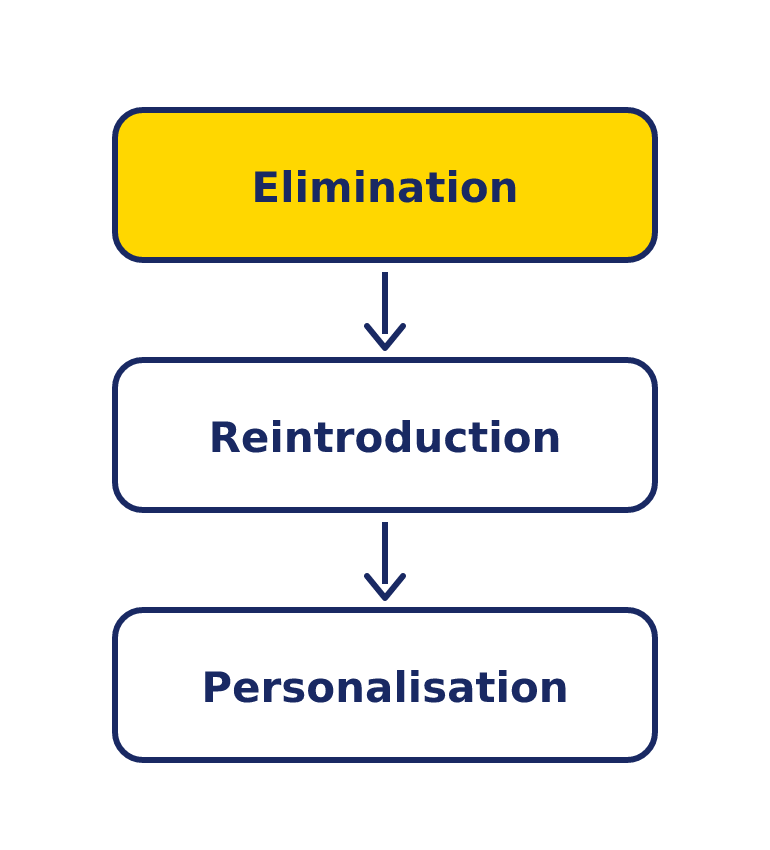
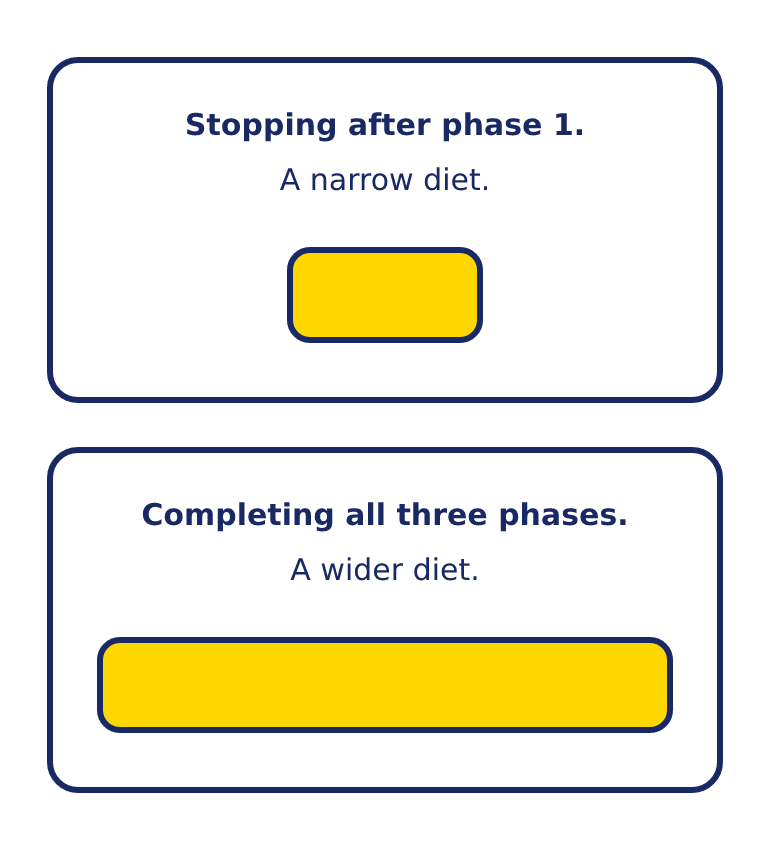
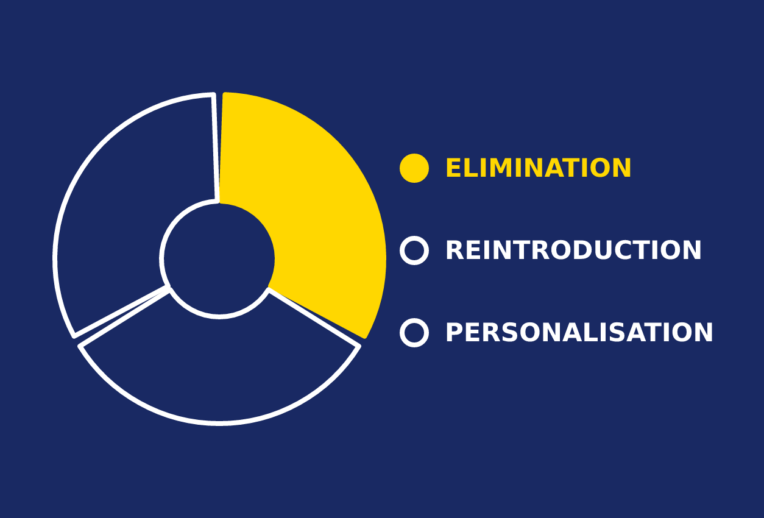
Illustration to reflect 3 phases of low-FODMAP diet

The low FODMAP diet has three phases, not one

Most people who try this approach know about the elimination phase, but many are not aware that phases 2 and 3 exist and even fewer complete them. Here’s what the process actually looks like.

Phase 1: Elimination (4 to 8 weeks)

In this phase, we remove high-FODMAP foods to relieve symptoms. FODMAPs are a group of fermentable carbohydrates found in a wide range of foods. In people with IBS, they can cause bloating, pain and altered bowel habits. Phase 1 is deliberately broad, removing all common FODMAPs at once in order to improve symptoms as quickly as possible.

Phase 2: Reintroduction (6 to 10 weeks)

Next, we test each FODMAP group individually in a structured way. This identifies which groups actually trigger your symptoms and at what amounts. As a result, this phase produces the clinical picture that phase 1 can’t. Without it, you only know that FODMAPs collectively affect you – not which ones or how much you can tolerate.

Phase 3: Personalisation

Finally, we build a long-term eating pattern around your individual findings. This restores as much variety as possible while maintaining symptom control. The end goal is a diet tailored to you, not a permanently restricted version of phase 1.

Reintroduction and personalisation are where a trained registered dietitian matters most. Structuring the challenges, interpreting the responses and building a sustainable plan from the results all take clinical judgement – something a general online guide can’t provide. I’ve also seen firsthand what happens when people try this part without support; it can be really overwhelming and rarely goes as planned.

Why stopping at phase 1 causes problems

Staying in phase 1 beyond the recommended period may not be healthy, even if the lack of symptoms feels good. Many of the foods we remove during the elimination phase are the types of foods we want to encourage for long-term gut health. They contain prebiotic fibres that feed beneficial bacteria in the colon. Evidence shows that levels of these bacteria decline after just 4 weeks of the restriction phase3. So the longer someone stays in phase 1 unnecessarily, the greater the impact on the gut microbiome – and that’s something I’m always very keen to avoid.

In clinic, the pattern I often see isn’t someone who tried the diet and found it didn’t work. It is someone whose diet stayed incredibly narrow over months or years of self-directed restriction.

Why phases 2 and 3 need clinical support

Reintroduction requires systematic testing of individual FODMAP groups and careful interpretation of the responses. Tolerance is highly individual – two people with identical IBS presentations may respond very differently to FODMAP groups and doses.

Interestingly, tolerance can also change over time. A food that triggers symptoms at one point may be well tolerated later. Understanding this prevents permanently excluding foods that may ultimately be fine.

What the process should actually deliver

Done properly, this approach should leave you with more freedom around food, not less. Most people finish the three-phase process eating a much wider variety of foods than in phase 1 and even wider than before they started the low-FODMAP journey. On top of that, they have a clear and specific understanding of what they personally need to limit, and by how much.

Amy has long brown hair and is smiling

Getting the right support

At The Gut Health Clinic, I work with patients through all three phases, from initial assessment and elimination support through to systematic reintroduction and long-term personalisation. The goal is always the same: a diet that is as varied, nutritionally complete, and enjoyable as possible, built around your individual responses rather than what the diet restricts only in phase 1.

If you completed phase 1 and felt better but are not sure where to go next, don’t stay stuck.

Book an appointment

To find out more about Amy and her expertise, please check out her biography.

To book an appointment, email [email protected] or submit a contact form.

We accept referrals and self-referrals, and are recognised by major health insurers including Aviva, Bupa, Cigna, Healix, WPA and Vitality.

When to speak to your GP

Some conditions closely mimic IBS. Before a dietary intervention such as a low-FODMAP diet, your GP should run certain tests to rule out anything more serious.

References

1. Halmos EP, Power VA, Shepherd SJ, Gibson PR, Muir JG. A Diet Low in FODMAPs Reduces Symptoms of Irritable Bowel Syndrome. Gastroenterology. 2014;146(1):67–75.e5. doi: https://doi.org/10.1053/j.gastro.2013.09.046
2. National Institute for Health and Care Excellence (NICE). Irritable bowel syndrome in adults: diagnosis and management. Updated 2017. Accessed 21st August, 2026. https://www.nice.org.uk/guidance/cg61/chapter/Recommendations
3. Staudacher HM, Lomer MCE, Farquharson FM, et al. A Diet Low in FODMAPs Reduces Symptoms in Patients With Irritable Bowel Syndrome and A Probiotic Restores Bifidobacterium Species: A Randomized Controlled Trial. Gastroenterology. Oct 2017;153(4):936–947. doi:10.1053/j.gastro.2017.06.010

Share

Related articles

Follow us

Free 10 step starter guide to good gut health

Everything you need to get started, in one download.

  • The four principles behind good gut health, in plain English
  • Plant points, and why 30 a week is the number that matters
  • 10 practical steps, from fibre and sleep to stress and supplements
  • Four gut-loving recipes and a goal-setting worksheet

Over 100,000 people have already joined. Get science-backed gut health advice from Dr Megan Rossi (PhD, RD, APD).