
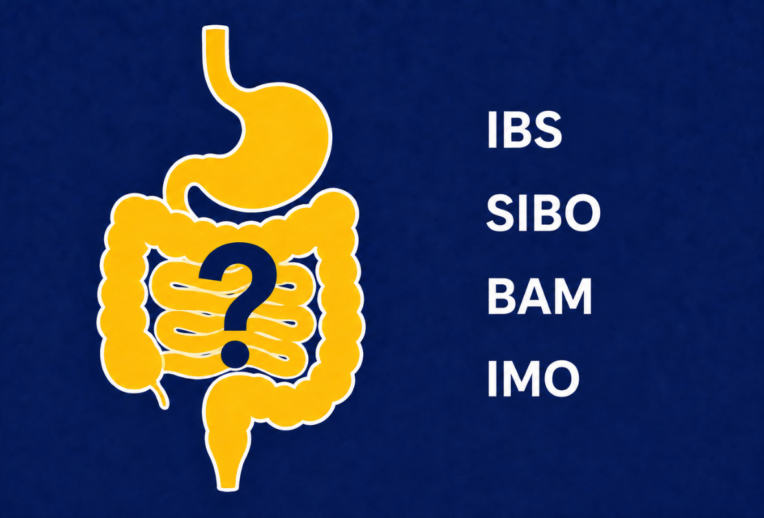
IBS, SIBO, BAM and IMO: why so many people are living with the wrong diagnosis

The Gut Health Doctor Icon

By Pratima Goodfellow

Dr Megan Rossi in a lab looking through a microscope

For many people, an irritable bowel syndrome (IBS) diagnosis feels like the end of a long search for answers. For a significant proportion, it is the right diagnosis. However, research using SeHCAT testing suggests that around 1 in 3 people with diarrhoea-predominant IBS (IBS-D) may actually have a different condition. In many of those cases, that condition is bile acid malabsorption (BAM).

As a specialist gastroenterology dietitian, I see this every week in clinic. People arrive having tried multiple diets, supplements and lifestyle changes. Often, they see little improvement, because the underlying issue remains unidentified. IBS is real, common and important. Nevertheless, clinicians sometimes use it as a catch-all label when access to specialist testing is limited.
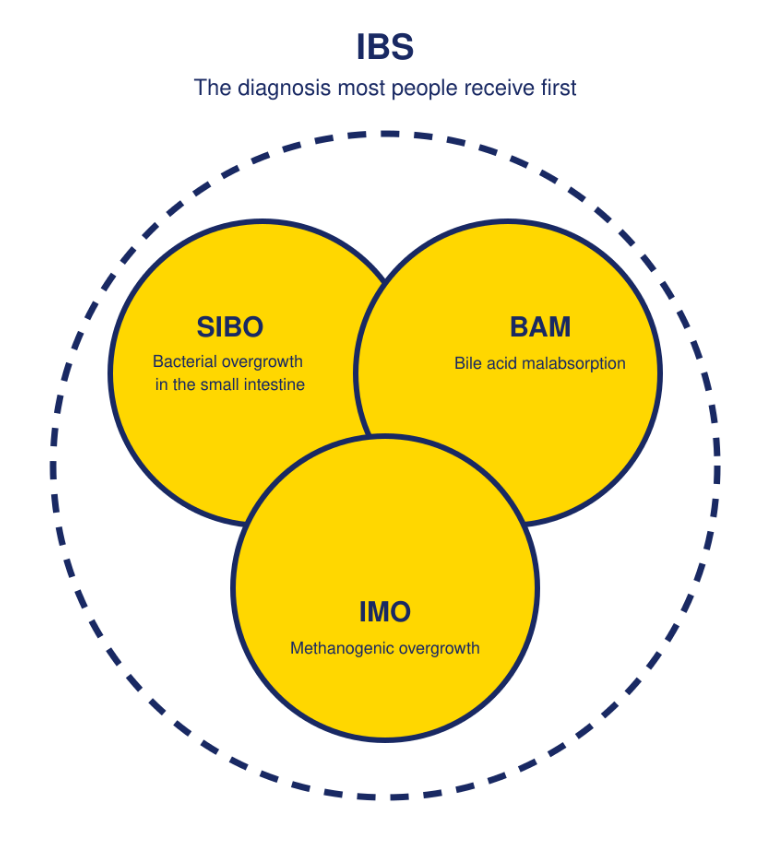
Flat diagram showing SIBO, BAM and IMO within an outer IBS circle, three conditions behind a wrong IBS diagnosis

Three conditions that are frequently missed

  •   Small intestinal bacterial overgrowth (SIBO)
  •   Bile acid malabsorption (BAM)
  •   Intestinal methanogenic overgrowth (IMO)

All three can mimic IBS almost perfectly on the surface. However, each has a distinct mechanism and each requires a different clinical approach.

Bridging the gap between a general label and an accurate diagnosis is often the moment when meaningful recovery begins.

The four conditions, and what makes each distinct

Although these conditions share overlapping symptoms, understanding what separates them is essential for getting the right treatment.

Irritable bowel syndrome (IBS)

IBS affects gut function, not gut structure. Doctors diagnose it based on a characteristic pattern of symptoms, typically abdominal pain with altered bowel habit, once they have ruled out other causes.

For many people, IBS is absolutely the correct diagnosis and one the clinic manages extensively. However, the challenge arises when clinicians apply it before completing a full investigation. In those cases, IBS becomes a starting point rather than a final answer.

Small intestinal bacterial overgrowth (SIBO)

SIBO occurs when bacteria from the large intestine and upper digestive tract grow excessively in the small intestine. These bacteria ferment carbohydrates before the body can absorb them properly. This produces gas and causes:

  •   Bloating
  •   Abdominal discomfort
  •   Diarrhoea
  •   Sometimes nutrient malabsorption

SIBO may affect a significant proportion of people carrying an IBS diagnosis. This is one reason why symptoms that do not respond to standard dietary management deserve further investigation. Moreover, prevalence figures vary considerably depending on the diagnostic method. The evidence base continues to evolve, which is part of why specialist assessment matters.

Bile acid malabsorption (BAM)

After eating, the body releases bile acids to help digest fat. Normally, the small bowel reabsorbs up to around 95% and returns them to the liver. In BAM, this recycling process breaks down. Excess bile acids spill into the large intestine, where they:

  •   Irritate the gut lining
  •   Draw in water
  •   Speed up transit

This produces urgent, frequent, watery stools that can be difficult to control. In more severe cases, or where fat digestion is also affected, stools may appear pale or greasy.

BAM can result from gallbladder removal, surgery or damage to the end of the small bowel. In some cases, no clear cause is identified. However, BAM looks so similar to IBS-D that doctors frequently miss it. I see it regularly in patients who have tried multiple diets without relief.

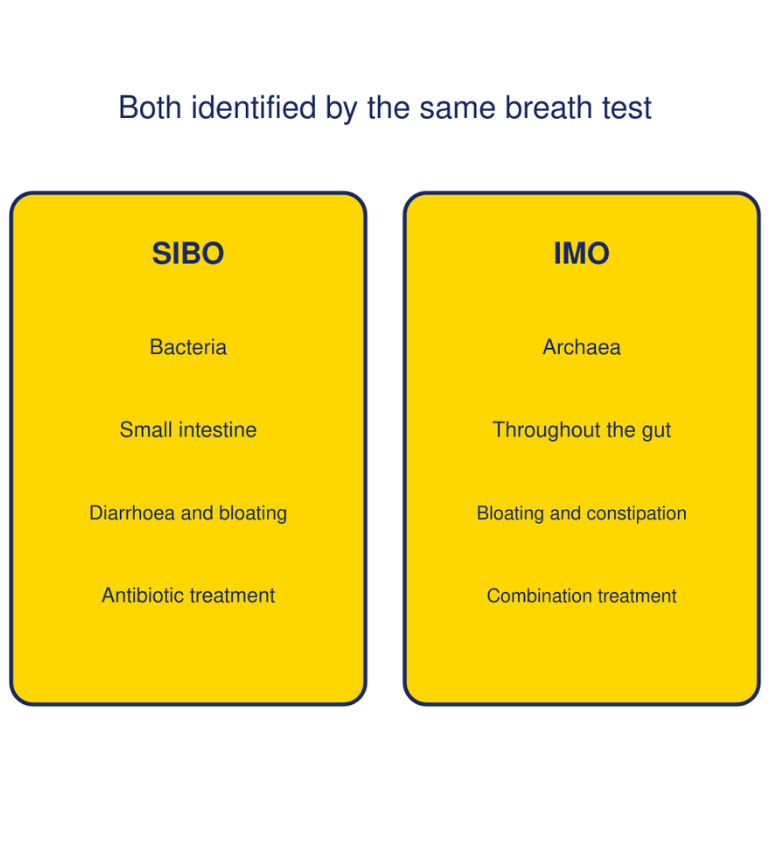
Flat diagram comparing SIBO and IMO by organism, location, symptoms and treatment, two causes of a wrong IBS diagnosis

Intestinal methanogenic overgrowth (IMO)

IMO is frequently grouped with SIBO but is a distinct condition. Rather than an overgrowth of bacteria, IMO involves an overgrowth of methane-producing archaea. These microorganisms are distinct from bacteria both biologically and in their effects on the gut. Where SIBO tends to stay in the small intestine, IMO can occur throughout the gut.

The clinical distinction matters. For example, SIBO typically presents with diarrhoea and bloating. IMO more commonly causes bloating and constipation. The two can also coexist. Doctors identify both through the same breath test, which measures hydrogen and methane simultaneously. It is essential to measure and interpret both gases, not just one.

As a result, standard SIBO antibiotics rarely work for IMO. IMO generally needs a combination of medications, which is why accurate identification matters so much.

Why the wrong IBS diagnosis changes everything

Each condition has a distinct treatment pathway. The dietary approach that helps one may do little for another, or in some cases make symptoms worse.

  • BAM: a gastroenterologist typically manages BAM with prescribed medication, alongside specific dietary adjustments supervised by a specialist gastroenterology dietitian. Nutritional monitoring forms an important part of ongoing care.
  • SIBO: doctors usually treat SIBO with a targeted course of antibiotics, combined with dietary changes to reduce the substrates feeding bacterial overgrowth in the small intestine.
  • IMO: IMO requires a different medical approach from SIBO. The antibiotic used alone for SIBO does not work effectively against methane-producing archaea. The dietary strategy also differs.
Flat diagram of the three low FODMAP phases, showing most people stop after elimination
  • IBS: when IBS is the right diagnosis, it responds to evidence-based dietary strategies, gut-brain approaches and, where appropriate, medication. As a Monash University-trained FODMAP dietitian, I regularly see patients who attempt the diet independently and stall at the elimination phase. They never complete the reintroduction and personalisation stages that make it effective.

Therefore, applying IBS dietary advice to someone who actually has BAM, or treating for SIBO in someone with IMO, rarely produces meaningful improvement. In practice, it often leads to unnecessary restriction without resolution.

Pratima Goodfellow, specialist gastroenterology dietitian at The Gut Health Clinic

Getting the right support

An accurate diagnosis is the foundation of effective long-term management. It supports not just symptom relief, but nutritional wellbeing and gut health over time.

A specialist gastroenterology dietitian can help identify when further investigation is needed. Furthermore, they can support you through the diagnostic process and design a dietary approach that targets what is actually driving your symptoms.

At The Gut Health Clinic, I work closely with gastroenterologists and GPs to support patients through every stage of this process. In particular, this includes identifying when further testing may be needed, interpreting results and designing a dietary plan that fits what is actually driving symptoms.

If you have been living with gut symptoms that do not seem to fit the IBS label, you are not alone. You do not need to navigate it alone.

Book an appointment

To find out more about Pratima and her expertise, please check out her biography.

To book an appointment, email [email protected] or submit a contact form.

We accept referrals and self-referrals, and are recognised by major health insurers including Aviva, Bupa, Cigna, Healix, WPA and Vitality.

When to speak to your GP

If your symptoms persist despite dietary changes, it is worth asking your GP whether further investigation is appropriate. Fortunately, each of these conditions has specific tests available through primary care or specialist referral.

References

  1. Wedlake L et al. Systematic review: the prevalence of idiopathic bile acid malabsorption as diagnosed by SeHCAT scanning in patients with diarrhoea-predominant irritable bowel syndrome. Alimentary Pharmacology & Therapeutics. 2009;30:707-717.
  2. Slattery SA et al. What is the cost of delayed diagnosis of bile acid malabsorption and bile acid diarrhoea? BMJ Open Gastroenterology. 2015;2:e000091.
  3. Rej A et al. Systematic review and meta-analysis: prevalence of non-malignant, organic gastrointestinal disorders misdiagnosed as IBS. Scientific Reports. 2022;12:2929.
  4. Pimentel M et al. ACG Clinical Guideline: Small Intestinal Bacterial Overgrowth. American Journal of Gastroenterology. 2020;115(2):165-178.
  5. Triantafyllou K et al. Critical appraisal of the SIBO hypothesis and breath testing. ESNM/ANMS Clinical Practice Update. Neurogastroenterology & Motility. 2024.
  6. Rezaie A et al. Hydrogen and Methane-Based Breath Testing and Its Application for Small Intestinal Bacterial Overgrowth and Intestinal Methanogen Overgrowth (North American Consensus). American Journal of Gastroenterology. 2017;112(5):775-784.
  7. Jacobs C et al. Pros and Cons of Breath Testing for SIBO and IMO. Gastroenterology & Hepatology. 2023;19(3).
  8. NICE HTG598 Scope: SeHCAT for investigation and diagnosis of bile acid diarrhoea. 2020.

Share

Related articles

Follow us

Get Your Free 10-Step Guide & Start Improving Your Gut Health Today

You’ll instantly get a practical, science-backed roadmap designed to help you:

  • Improve digestion and reduce common gut symptoms
  • Build a healthier microbiome with simple daily habits
  • Understand what actually works (and what’s just hype)
  • Feel more confident about the food choices you make

Join thousands learning how to support their microbiome with science-backed advice from Dr Megan Rossi (PhD, RD).