




Don’t be fooled by your stool! …or those commercial poop tests. They’re NOT valid.
Why?
Because there’s still SO much we don’t know about our GM (gut microbiota, the trillions of microbes living in your gut) there are still thousands of microbes we have no idea about yet, we haven’t even named them.
So we just can’t fully explore someone’s gut microbiome in just a poop sample. Not yet anyway!
As a result, these commercial tests are at huge risk of misinterpreting and overestimating the science.
For now, step away from those at-home ‘gut microbiome testing kits’ and save your money.
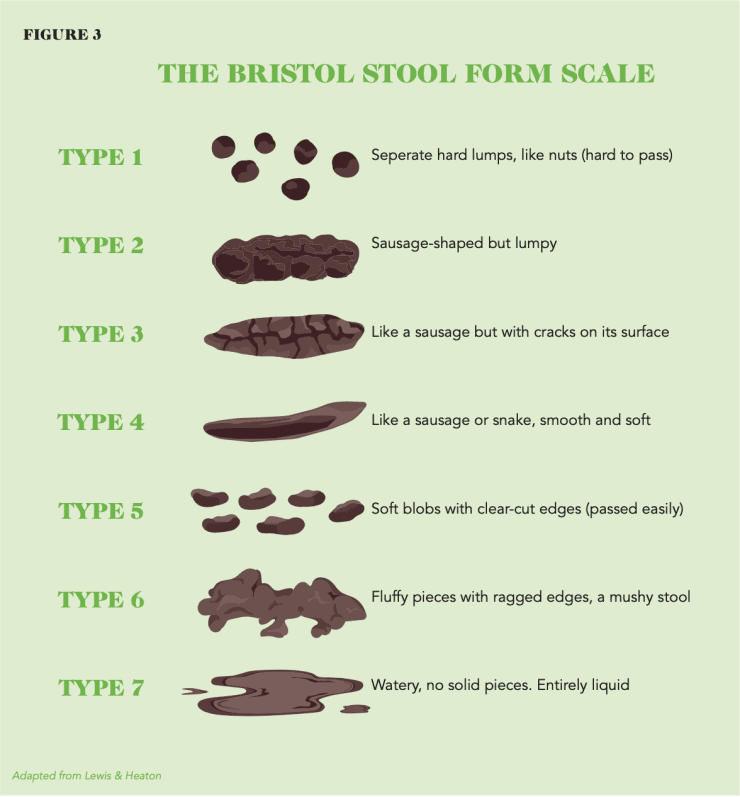
Instead, the best way to check in with your gut via your poop is… to have a look in the bowl! It’s totally free too and it’s an invaluable resource to discover what’s going on inside you. You don’t have to inspect every single splash-down, but try having a quick look around once a month! And you’re looking at 5 main poop personality traits: consistency, frequency, time, colour and size…
- Consistency: You’re aiming for a type 3, 4 or 5 on the Bristol Stool Chart.
- Frequency: Anywhere from 3 a week up to 3 a day is considered ‘normal’.
- Time: Most people go in the morning, but there’s no right or wrong time… when you need to go, go!
- Colour: varying shades of brown.
- Size: Larger poops (about the size of more than 2 eggs) are linked with a lower risk of colon cancer.
For those with my book head over here for my ‘checking in with your poop’ guide.